
Statues antiques de Bouddha birmanes
Art bouddhiste du Myanmar / de la Birmanie
Découvrez une sélection de sculptures bouddhistes birmanes et du Myanmar, représentatives des riches traditions artistiques de l'un des centres les plus importants de la culture bouddhiste en Asie du Sud-Est.
De l'art bouddhique monumental de Bagan à la sculpture distinctive des royaumes birmans ultérieurs et des traditions régionales, les images de Bouddha birmanes présentent une remarquable diversité de formes, d'iconographie, de matériaux et de techniques.
Notre collection comprend des sculptures de Bouddha sélectionnées pour leurs qualités artistiques et leur intérêt historique, avec une attention particulière portée au style, à la période, au matériau, à l'état et à la provenance.
Statue antique de Bouddha birmane et art bouddhique du Myanmar
Le Myanmar, historiquement connu en Occident sous le nom de Birmanie, possède une longue et prestigieuse tradition de sculpture bouddhique. Le bouddhisme s'est profondément enraciné dans toute la région, et l'art bouddhique s'est développé à travers les royaumes successifs, les centres religieux et les traditions artistiques locales.
Les statues de Bouddha birmanes présentent des variations considérables selon leur période et leur lieu de production. Les sculptures associées à Bagan, Ava, aux régions Shan, à Toungoo, à Mandalay et à d'autres centres artistiques peuvent révéler des approches très différentes en matière de traits du visage, de proportions corporelles, de robes, de couronnes et d'iconographie.
Pour les collectionneurs, il est essentiel de comprendre ces différences. L'identification d'un Bouddha birman doit prendre en compte la sculpture dans son ensemble plutôt que de se fier à une seule caractéristique. Style, iconographie, matériau, technique de fonte ou de sculpture, surface, état et provenance sont autant d'éléments qui contribuent à établir son contexte historique et artistique.
La sculpture bouddhiste birmane est particulièrement fascinante car ses traditions artistiques ont évolué au fil des siècles tout en interagissant avec les cultures voisines, notamment l'Inde, la Thaïlande et le monde khmer.
Explorez notre collection de statues de Bouddha birmanes
Notre collection comprend des sculptures bouddhistes birmanes représentant différentes périodes, traditions régionales et styles artistiques.
Chaque œuvre doit être considérée individuellement. Les éléments importants comprennent :
-
Période et style — identification de la tradition artistique et datation approximative.
-
Caractéristiques régionales — comparaison des traditions Mon, Arakan et birmanes avec d'autres traditions.
-
Iconographie — étude de la posture du Bouddha, de ses gestes de la main, de ses attributs et de l'imagerie associée.
-
Matériaux et techniques — examen du bronze, du bois et d'autres matériaux, ainsi que des techniques utilisées pour réaliser la sculpture.
-
Surface et patine — l’aspect et l’état de la surface font partie intégrante de l’évaluation globale.
-
Provenance — documenter l'historique et la propriété connus d'un objet lorsque l'information est disponible.
-
État de conservation — identification des restaurations, des pertes, des altérations et autres facteurs pertinents concernant la sculpture.


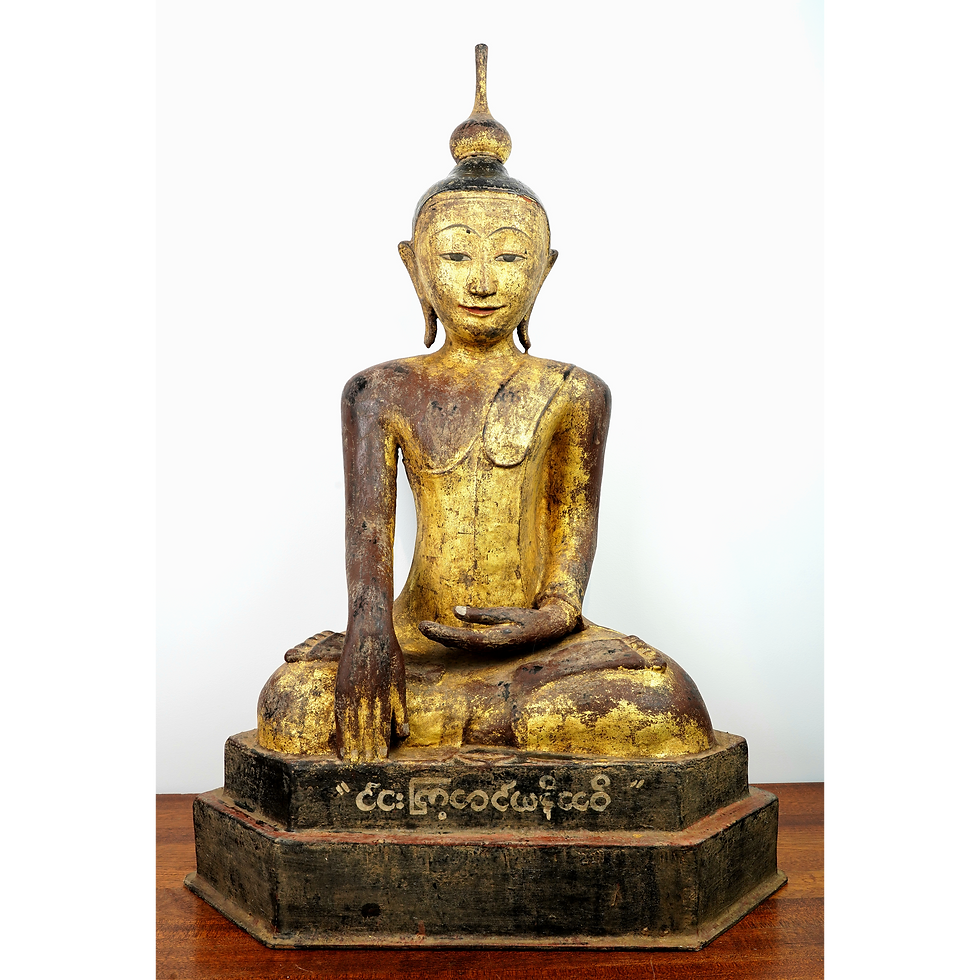


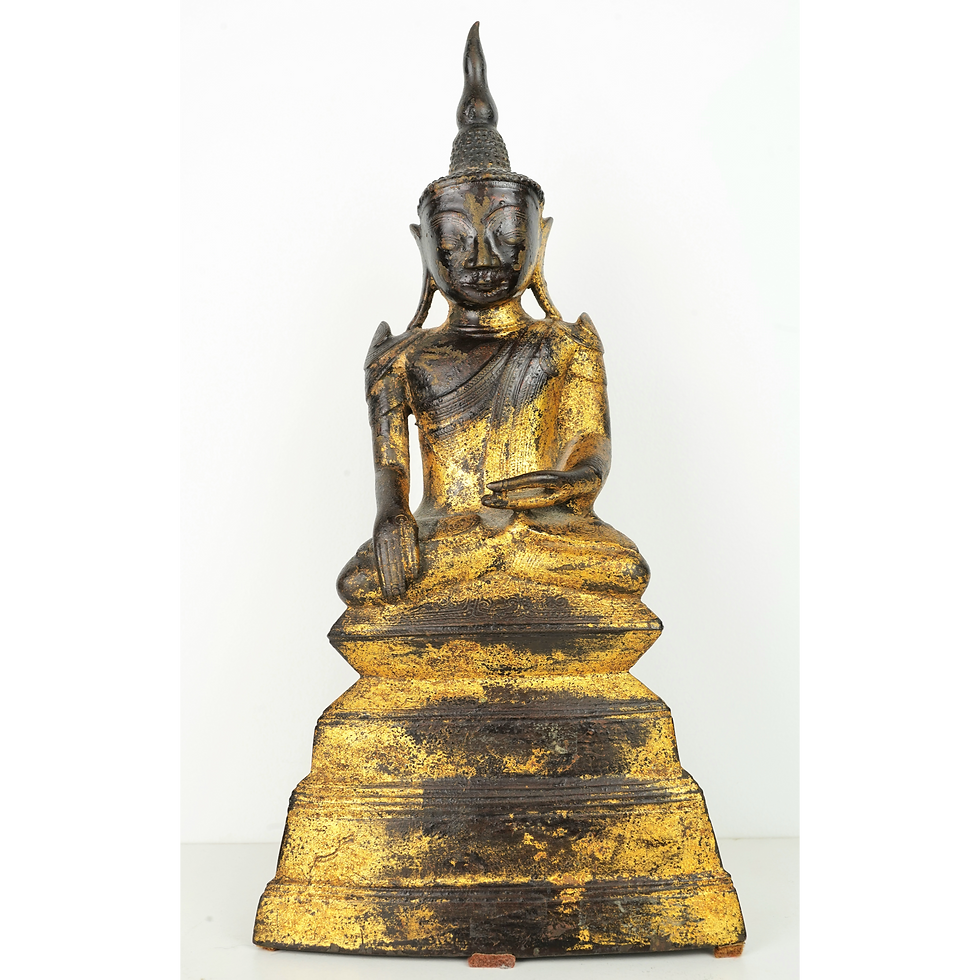


Statues de Bouddha Pyu
La tradition culturelle Pyu représente l'un des premiers chapitres importants de l'histoire du bouddhisme et de l'art bouddhique au Myanmar. S'épanouissant dans certaines régions du centre du Myanmar actuel, des premiers siècles de notre ère jusqu'au début du deuxième millénaire, les cités-États Pyu ont développé des liens étroits avec le monde bouddhique plus vaste de l'Asie du Sud et du Sud-Est.
La sculpture bouddhique Pyu témoigne de ces premiers échanges culturels et révèle des influences des traditions artistiques bouddhistes indiennes, mêlées à des caractéristiques locales distinctives. Les images de Bouddha associées à la tradition Pyu sont particulièrement importantes pour comprendre le développement initial de l'iconographie et de la sculpture bouddhistes au Myanmar.
Les anciens centres Pyu de Sri Ksetra, Halin et Beikthano apportent des témoignages archéologiques importants de cette culture bouddhiste primitive. Les sculptures et autres objets religieux associés à ces sites démontrent le développement des pratiques et des traditions artistiques bouddhistes avant l'essor de Bagan.
Les images de Bouddha de l'époque Pyu présentent une grande variété d'apparences selon leur datation, les matériaux utilisés et le contexte artistique. Les traits du visage, les proportions du corps, le traitement de la robe, la gestuelle et le modelé de la figure sont autant d'indices précieux pour l'étude d'une sculpture. Les comparaisons avec les traditions indiennes et celles des pays voisins d'Asie du Sud-Est sont également importantes, car le monde Pyu était intégré à de vastes réseaux d'échanges religieux et artistiques.
Pour les collectionneurs et les chercheurs, la sculpture bouddhique Pyu revêt une importance historique particulière car elle appartient à une phase ancienne du patrimoine artistique bouddhique du Myanmar. Son attribution à la période Pyu exige une étude approfondie, menée par des spécialistes, de son style, de ses matériaux, de sa technique, de son état et de sa provenance, d'autant plus que les artistes birmans ultérieurs ont continué à réinterpréter les formes bouddhiques antérieures.
La tradition Pyu constitue donc un maillon essentiel de l'histoire de l'art bouddhique birman, précédant le développement extraordinaire de l'architecture et de la sculpture bouddhiques à Bagan.
Statues de Bouddha de Bagan - Art bouddhiste païen
La cité antique de Bagan est l'un des centres les plus importants de l'histoire de l'art bouddhique birman. Entre le XIe et le XIIIe siècle, des milliers de monuments et d'images religieuses bouddhistes ont été créés dans la sphère culturelle de Bagan.
À Bagan, on trouve des images du Bouddha sculptées dans la pierre, le stuc, le bronze et d'autres matériaux. Ces représentations mettent souvent l'accent sur la présence spirituelle sereine du Bouddha, tandis que les décors architecturaux et les monuments religieux offrent un contexte essentiel à leur compréhension.
Le développement de la sculpture bouddhique à Bagan témoigne de liens avec les traditions indiennes antérieures ainsi qu'avec les évolutions artistiques birmanes locales. Différentes périodes et ateliers ont engendré des variations dans la modélisation des visages, les proportions corporelles, le traitement des vêtements et l'iconographie.
Pour les collectionneurs, identifier un Bouddha associé à la tradition de Bagan nécessite une comparaison minutieuse avec des exemples documentés et la prise en compte de sa provenance, de son matériau, de son état et de ses caractéristiques stylistiques.
Statues de Bouddha Mon Hanthawaddy
L'art bouddhique môn représente l'une des traditions artistiques les plus importantes de l'histoire du Myanmar et de l'Asie du Sud-Est continentale. Le peuple môn a joué un rôle significatif dans la diffusion et le développement du bouddhisme theravada, notamment dans le Bas-Myanmar et les régions historiquement liées aux royaumes môn.
Hanthawaddy, dont le principal centre était Bago, devint un important pôle politique, religieux et artistique du Bas-Myanmar. La sculpture bouddhiste associée à cette période témoigne de la richesse des traditions artistiques Môn et révèle des liens avec d'autres centres culturels et religieux d'Asie du Sud-Est.
Les images de Bouddha de Mon et Hanthawaddy présentent des traits distinctifs, des proportions élégantes et des robes finement modelées. Le traitement de la tête, des oreilles, des mains et des drapés varie selon la période et l'atelier régional, ce qui rend une comparaison stylistique détaillée essentielle pour l'étude de chaque sculpture.
La période de l'Hantawaddy est particulièrement importante pour l'histoire du bouddhisme theravada en Birmanie. Les centres religieux, les monastères et les temples ont favorisé la production d'images de Bouddha et d'autres objets sacrés, contribuant ainsi à une riche tradition de sculpture bouddhique dans le Bas-Birmanie.
Pour les collectionneurs, l'identification d'un Bouddha Mon ou Hanthawaddy exige une analyse globale de la sculpture. Les caractéristiques du visage, les proportions du corps, l'iconographie, le matériau, la technique de fonte ou de sculpture, la surface, l'état de conservation et la provenance sont autant d'éléments qui contribuent à son attribution. Les comparaisons avec les traditions birmanes, thaïlandaises et autres traditions d'Asie du Sud-Est sont également utiles, car les influences artistiques ont transcendé les frontières politiques et géographiques.
La sculpture bouddhiste Mon et Hanthawaddy occupe une place importante dans l'histoire plus large de l'art birman, reliant les traditions bouddhistes antérieures au développement ultérieur de styles artistiques birmans distinctifs.
Statues de Bouddha Ava
Ava, également connue sous le nom d'Inwa, fut l'un des principaux centres politiques et culturels du Myanmar médiéval. Fondée au XIVe siècle près de l'actuelle Mandalay, Ava fut la capitale de plusieurs royaumes birmans successifs et joua un rôle important dans le développement de l'art et de l'architecture bouddhistes.
Les images de Bouddha associées à la tradition Ava témoignent de l'évolution de la sculpture birmane durant cette période. Elles peuvent présenter des traits du visage distinctifs, des proportions harmonieuses et des robes finement modelées, tout en perpétuant les traditions artistiques héritées des anciens centres de la culture bouddhiste birmane.
Les statues du Bouddha Ava présentent des variations considérables selon leur datation, leurs matériaux et leur contexte artistique. Le traitement du visage, des cheveux, des oreilles, des mains et des vêtements fournit des indices stylistiques précieux, tandis que la posture et les mudras permettent d'identifier le sujet iconographique. Le bronze et le bois figuraient parmi les matériaux importants utilisés pour la sculpture bouddhique dans la tradition artistique birmane.
La période Ava est particulièrement importante car elle représente une étape majeure dans le développement de la sculpture bouddhiste birmane, entre les grandes réalisations artistiques de Bagan et les traditions ultérieures associées à Toungoo et Mandalay.
Pour les collectionneurs et les chercheurs, l'identification d'un Bouddha Ava exige une comparaison minutieuse avec des exemples documentés et la prise en compte du style, du matériau, de la technique, de l'état et de la provenance. Les sculptures birmanes plus récentes pouvaient également conserver ou réinterpréter consciemment des caractéristiques des premiers Bouddhas Ava, ce qui rend l'attribution précise du Bouddha réservée aux spécialistes.
La sculpture bouddhiste Ava, ou Inwa, constitue donc une partie importante du patrimoine artistique du Myanmar et offre aux collectionneurs l'opportunité d'explorer l'évolution de l'imagerie bouddhiste birmane au cours d'une période formatrice de l'histoire du pays.
Statues de Bouddha de Toungoo
La période Toungoo représente un chapitre important de l'histoire de l'art bouddhique birman. La dynastie Toungoo a acquis une grande importance au XVIe siècle, durant une période de développement politique et culturel au Myanmar.
Les images de Bouddha associées à la tradition Toungoo présentent des traits du visage, des proportions et un traitement des vêtements et de la tête caractéristiques. La sculpture en bronze occupe une place particulièrement importante dans l'histoire plus large de l'iconographie bouddhiste birmane.
L'étude de la sculpture Toungoo est particulièrement intéressante car les traditions artistiques birmanes ont continué à se développer tout en conservant des liens étroits avec les formes religieuses et artistiques antérieures.
Pour les collectionneurs, un Bouddha Toungoo doit être évalué par une combinaison de comparaison stylistique, de matériaux et de techniques, d'état et de provenance plutôt que par une seule caractéristique visuelle.
Statues de Bouddha Shan
Les régions Shan du Myanmar ont développé des traditions artistiques bouddhistes distinctives, influencées par les liens culturels entre le Myanmar, la Thaïlande et les régions voisines de l'Asie du Sud-Est continentale.
Les images du Bouddha Shan peuvent présenter des proportions élégantes et un traitement distinctif du visage, des cheveux, des vêtements et de la posture. Les territoires Shan étant connectés à plusieurs mondes culturels et artistiques, certaines sculptures individuelles peuvent parfois révéler des influences qui dépassent les frontières nationales modernes.
Pour les collectionneurs, distinguer un Bouddha Shan des traditions birmanes ou thaïlandaises du nord apparentées peut nécessiter un examen attentif des détails stylistiques, des matériaux, des proportions et du contexte historique.
La sculpture bouddhiste Shan constitue donc une partie importante de l'histoire plus large de l'art bouddhiste au Myanmar et en Asie du Sud-Est continentale.
Statues de Bouddha de Mandalay
Mandalay devint un centre important de la culture birmane et de la production artistique bouddhiste au cours de l'histoire récente du Myanmar. La sculpture bouddhiste associée à Mandalay témoigne de la continuité des traditions birmanes établies, parallèlement aux évolutions dans la représentation du Bouddha.
Les images du Bouddha de Mandalay peuvent présenter des caractéristiques faciales, des robes et des gestes distinctifs, avec des variations considérables selon la date, l'atelier et la fonction prévue.
Lorsqu'on examine un Bouddha birman tardif, il est important de distinguer son époque et le style ou la tradition qu'il représente. Un examen attentif des matériaux, de la technique, de la surface, de l'état et de la provenance permet d'établir un diagnostic plus précis.
Statues du Bouddha d'Arakan
L'Arakan, historiquement connu sous ce nom et aujourd'hui généralement appelé Rakhine, a développé une tradition artistique bouddhiste singulière le long de la côte ouest du Myanmar. Sa position géographique, face au golfe du Bengale et reliée à la fois au sous-continent indien et à l'Asie du Sud-Est continentale, a favorisé des siècles d'échanges culturels et artistiques.
La sculpture bouddhique d'Arakan reflète cette position unique à la croisée de différents univers culturels. Les images de Bouddha associées à cette région peuvent présenter des caractéristiques influencées par les traditions artistiques indiennes, birmanes et locales, créant ainsi un vocabulaire régional distinctif au sein de la vaste histoire de l'art bouddhique du Myanmar.
L'ancien royaume d'Arakan, avec ses centres importants tels que Dhanyawadi, Vesali et Mrauk-U, a produit d'importants monuments bouddhistes et des images sacrées. La période de Mrauk-U, en particulier, représente un chapitre majeur de l'histoire artistique de la région, la sculpture bouddhiste y présentant une grande variété de formes et d'influences.
Les statues de Bouddha arakanaises présentent une grande variété selon la période, le centre artistique et les matériaux utilisés. Les traits du visage, les proportions du corps, la coiffure, le traitement de la robe, la posture et les gestes des mains constituent autant d'indices précieux pour l'étude d'une sculpture. L'influence des traditions artistiques voisines est également essentielle pour situer une image arakanaise dans son contexte historique.
Pour les collectionneurs et les chercheurs, l'identification d'un Bouddha d'Arakan ou de Rakhine exige un examen attentif de la sculpture dans son ensemble. Style, iconographie, matériau, technique, état et provenance doivent être considérés conjointement, d'autant plus que les influences artistiques circulaient à travers le golfe du Bengale et entre le Myanmar et les régions voisines.
La sculpture bouddhiste arakanaise occupe une place à part dans l'histoire de l'art birman. Son alliance de traditions locales et d'influences plus larges d'Asie du Sud et du Sud-Est rend les images de Bouddha arakanaises et rakhines particulièrement fascinantes pour les collectionneurs et les étudiants en sculpture bouddhiste.
Explorez notre blog sur l'art bouddhiste thaïlandais
Vous avez une statue de Bouddha birman à vendre ou à faire estimer ?
Possédez-vous une statue de Bouddha thaïlandaise ou une autre œuvre d'art bouddhique asiatique et souhaiteriez-vous en connaître l'origine, la période ou la valeur potentielle ?
Rix Enchères offre une expertise spécialisée aux propriétaires envisageant une estimation, un dépôt-vente ou une vente aux enchères.
Une évaluation préliminaire peut prendre en compte des photographies, des dimensions, des inscriptions, la provenance, l'état et d'autres informations disponibles.